-
787
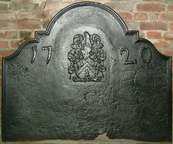
Description: Rectangular with an arched rectangular style arch linked by symmetrical cyma curves; double moulded edges except on the base; the date, 1720, in characteristic lettering of the early 18th century, bisected by a shield and crest formed from the impression of a carved wooden stamp. The arms are probably those of a branch of the Harvey family: a chevron (gules) between three bear’s gambs erased and erect armed (ermines).
Notes: The Harvey family of Eythorne, Kent, bore similar, but not identical arms, differenced by the addition of three crescents on the chevron. There are stylistic similarities between this fireback and two firebacks bearing the arms of the Duke of Dorset at Knole, which are probably of similar date, suggesting that they could be products of the same furnace.
Inscription: 17 20
Arms: Harvey of Eythorne, Kent (variant)
- Decoration tags:
- rectangular with canted top corners and round arch (shape)
- double stepped astragal (edging)
- carved stamps
- individual numbers
- armorial
- text
Manufactured: in 1720 in the Weald area of England.
Current location: Quebec House, Westerham, Kent, England.
Museum number: 529003 (part of the National Trust museum group)
- Attached to series:
- Personal armorial firebacks
- 1720s Wealden series
-
944
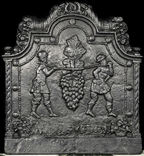
Description: Cavetto-canted arched rectangular shape; double fillet edging on top, pilasters with diagonal striping at sides; double bead and pellet moulding parallel to, and inside fillet, enclosing pictorial representation of Joshua and Caleb carrying an outsize bunch of grapes; below them, at each side, a basket of flowers and fruit, and between them a cartouche with a date; on top, two symmetrical cornucopiae spilling their contents down the canted shoulders of the plate; at bottom, a plain extension panel.
Notes: The image is derived from a fireback of c.1700, in the series identified by the letters GK, as is the date cartouche. This is a contrived design using elements from another fireback.
Inscription: [indecipherable poss. 1700]
- Decoration tags:
- rectangular with canted top corners and round arch (shape)
- complex individual (edging)
- carved pattern panels
- extension panels
- pictorial
- biblical
- text
- humans
- plants
Manufactured: in the 19th century in France.
Current location: not known.
- Attached to series:
- Joshua and Caleb firebacks
- 'Dutch' GK series
-
992
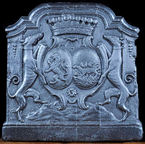
Description: Ogee-arched rectangular shape, centred by a scroll-edged cartouche enclosing a pair of armorial ovals, the left cast with a crowned lion rampant, the right with a salamander surrounded by flames, all between a pair of greyhound supporters and edged with bellflower-decorated pilasters.
Notes: The heraldic design depicting the marriage of Paul de Chabannes (1686-1769), comte de Chabannes de Vergers, with Marie-Madeleine Sallonyer on 1st July 1715 (whose shield is a golden salamander bedded in red hot fire on a blue shield).
Copies of this fireback are known.
- Decoration tags:
- rectangular with canted top corners and round arch (shape)
- whole carved pattern
- planklines
- armorial
- animals
Manufactured: in the early-18th century in France.
Current location: not known.
Citation: Palasi, P., 2014, Plaques de Cheminées Héraldiques (Paris, Éditions Gourcuff-Gradenigo).
- Attached to series:
- Foreign armorial firebacks
-
790
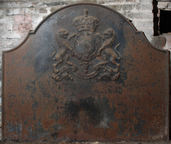
Description: Rectangular with arched rectangular shaped top joined by cavetto curves; astragal edging; shield, supporters, ducal coronet, motto and garter of the Duke of Dorset: Quarterly, Or and gules, a bend vair.
Notes: Almost certainly the arms of Lionel Sackville KG (1688-1765), created first duke of Dorset in 1720; many different firebacks exist, all with precisely the same armorial stamp.
Inscription: [around shield] HONY SOIT QUI MAL Y PENSE / [on motto scroll] AUT NUNQUAM TENTES, AUT PERFICE
Arms: Lionel Sackville, 1st Duke of Dorset
- Decoration tags:
- rectangular with canted top corners and round arch (shape)
- astragal (edging)
- carved pattern panels
- armorial
- text
Manufactured: in the early-18th century in the Weald area of England.
Current location: in private hands, Whatlington, East Sussex, England.
- Attached to series:
- Dorset arms series
- Personal armorial firebacks
- Sackville firebacks